

OFFSHORE HELICOPTER OPERATIONS OCCURRENCES IN BRAZIL BETWEEN 2016 AND 2020
By Tarcisio Decotelli

- INTRODUCTION
Commercial aviation is one of the most hazardous businesses but has the lowest accident rates among mass transport modals. As a contributor to this result, reports with flight safety statistics are published annually by national agencies, international bodies and companies.
However, these reports almost in their entirety only contain data on accidents, leaving hundreds of occurrences aside. One occupational safety theory that is used by flight safety is the Heinrich's pyramid. Herbert William Heinrich says in his book Industrial Accident Prevention - A Scientific Approach that for each heavy accident, there are 29 light accidents and 300 incidents that have already occurred. Much has been lost in terms of accident prevention, not studying most of those occurrences.
This work aims to look at the recorded occurrences including serious incidents and incidents, to collect data and statistics that can amplify the efficiency of preventive actions, reducing the incidence of incidents and consequently leaving the probability of occurrence of accidents even lower.
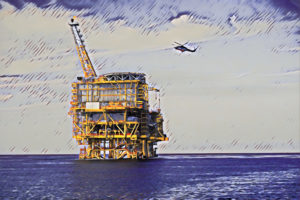
The data that will be presented throughout the text focus on a specific sector of aviation: offshore helicopter operations. According to data from the International Association of Oil & Gas Producers (IOGP), offshore helicopter operations move worldwide, on average, more than 4,500,000 passengers annually between airports and oil and gas (O&G) exploration units. Brazil is responsible for approximately 15% of all offshore passengers transported in the world and for 12.8% of its departures, as will be seen below.
As a main contribution, the article brings the results of the systematization of collected data and the critical considerations regarding the statistical behavior of civil aviation occurrences related to the offshore transport of passengers and cargo. It is concluded that these theoretical interpretations establish a methodological path that can help in the prevention of aeronautical occurrences in general, and in the offshore segment in particular.
2. METHODOLOGY
For this study, data from the Panel SIPAER portal of the National Center for Investigation and Prevention of Accidents (CENIPA) were used, which contains all aeronautical occurrences that have taken place in Brazil since 2010.
Data from the years 2016 to 2020 were extracted. As there is no specific classification for Offshore operations, a filter of occurrences was used. Two-engine helicopters, predominant in operations and flights originating in airports that serve as Offshore Bases: Cabo Frio-RJ, Campos dos Goitacazes-RJ, Carauari-AM, Coari-AM, Itanhem-SP, Macae-RJ, Rio de Janeiro-RJ, Salvador-BA and Vitoria-ES.
Most of the occurrences do not have its report published. Because an investigation is ongoing or has been passed on to the operator for internal investigation. Therefore, for the accomplishment of this work, the analysis for some classifications were made on top of the information contained in the occurrence’s report. It is understood that the final report, which is the result of an investigation, will bring more detailed results, but the absence of it will not compromise the scope of the objectives of this study.
The risk events that are presented and classified are based on Basic Aviation Risk Standard (BARS)[1], published by Flight Safety Foundation from the author's perception, as well asprevention goalsrelated to the risk that failed in the occurrence. The compiled data were transformed into quantitative charts.
Before proceeding with the presentation of the results, it is worth mentioning some of the basic definitions that help in understanding and in the analysis work proposed here:
2.1 DEFINITIONS
- System Failure: Structural or propulsion/mechanical/avionic system failures of the helicopter that could result in accident or escalate another threat.
- Aircraft Upset: Loss of control of the aircraft while in-flight or loss of situational awareness in relation to mobile vessels.
- Aircraft Upset: Loss of control of the aircraft while in-flight or loss of situational awareness in relation to mobile vessels.
- Airworthiness Management: Ensuring aircraft are airworthy and reliable.
- Early Diagnosis of Potential Failures: Ensuring the early detection of impending critical failures to facilitate timely corrective action.
- Application of Operational Procedures: Correct compliance and execution of rules, tasks and procedures determined in the aircraft and company manuals.
- Effective Maintenance: Ensuring maintenance is conducted to the required Maintenance Program and standards.
- Enhanced Reliability: Ensuring that flight operations and continuing airworthiness choices minimize the risk of critical failures and provide assurance of safe outcomes during all engine failure modes.
[1] BARS: Basic Aviation Risk Standard, aviation risk based standards published by Flight Safety Foundation.
3. RESULTS
3.1 OCCURRENCES
The graph below shows the number of aeronautical occurrences (incidents, serious incidents and accidents that happened between the year 2016 and the year 2020. In this period there were 44 occurrences, being: three accidents, two serious incidents and 39 incidents. It is observed that the quantity increases in one year, decreases in the next and increases again in the next year, a sinusoidal frequency [1] around an average of 8.8 occurrences per year. An accumulated growth of 12.95% in the number of occurrences in the period.
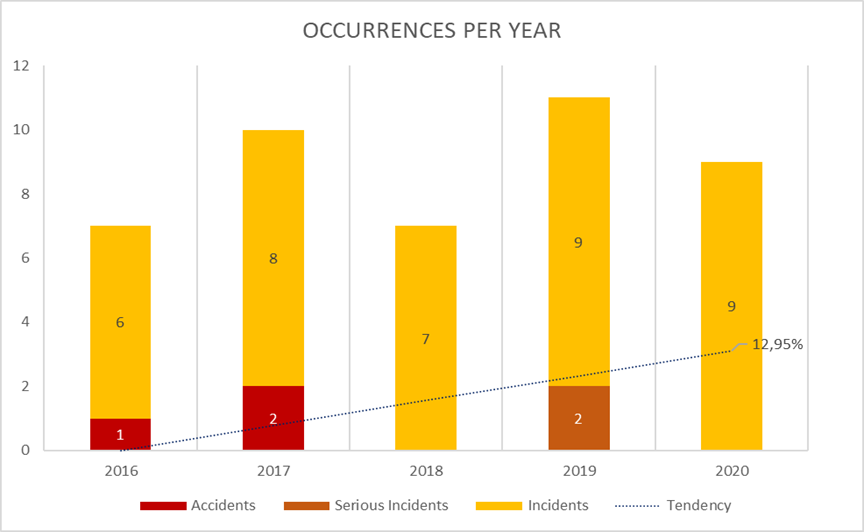
According to the data, approximately for every 15 occurrences, there is an accident. A frequency higher than the eventuality of a serious incident, in the period.
[1] Mathematical curve that describes a smooth repetitive oscillation, this being ,a continuous wave.
3.2 FLIGHT HOURS
To better understand the frequency of occurrences and their trend, it is necessary to study the number of takeoffs or hours flown in the period.
Due to the absence of accurate data from the Brazilian offshore market, an estimated approximation of the hours flown published in the IOGP Accident 2020 was made. Based on the document South America Offshore Helicopter Services Market – Growth, Trends, Covid-19 Impact, And Forecasts (2021 – 2026)[1], that estimates that the Brazilian market holds 65% of South and Central America, 65% of the hours presented were calculated in the IOGP document [2]and used as base in on this study.
The graph below shows that there is a decrease in the number of hours flown each year. Possibly due to the increasing use of larger aircrafts, in addition to a sudden drop in 2020 due to the Covid-19 pandemic.
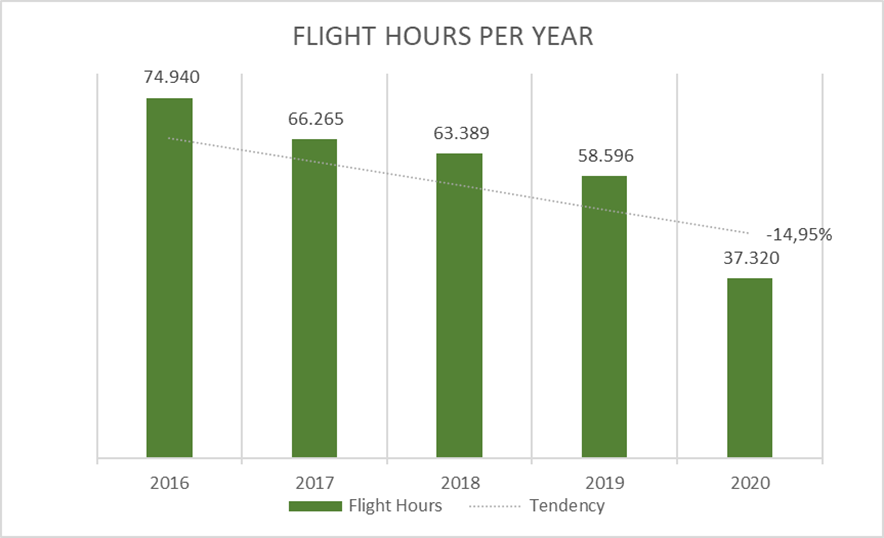
In the last five years, between 2016 and 2020, estimate 300,511 hours flown and an average reduction trend of 14.95%, with a sharp drop in 2020 due to the pandemic.
Comparing to the occurrences data, it is observed that the hours flown fall, there is a reduction in the operation while there is a tendency of increase in the occurrences. It can be said that there is a real increase in incidents with helicopters in the oil and gas market in Brazil.
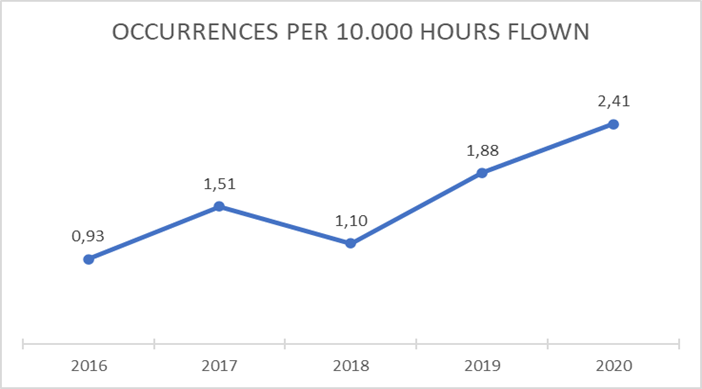
A good indicator, which is commonly used by the market, to identify this trend is the rate of occurrences per 10,000 hours flown. As seen in the chart below, in 2020 the rate was 2.41. An increase of 158% compared to the value in 2016.
[1] https://www.mordorintelligence.com/industry-reports/south-america-offshore-helicopter-services-market
[2] IOGP Report 2020a – Safety Performance Indicator – Aviation Accidents – 2020 data
3.3 TYPE OF OCCURRENCE
CENIPA classifies each aeronautical occurrence as described in MCA 3-6[1]The types of occurrences with the highest incidence are SYSTEM / COMPONENT FAILURE OR MALFUNCTIONING, with 25% of occurrences, ENGINE FAILURE IN FLIGHT, 18.2%, LANDING IN UNPLANNED PLACE, 11.4% and LEAKAGE OF OTHER FLUIDS, 9.1% of the occurrences.
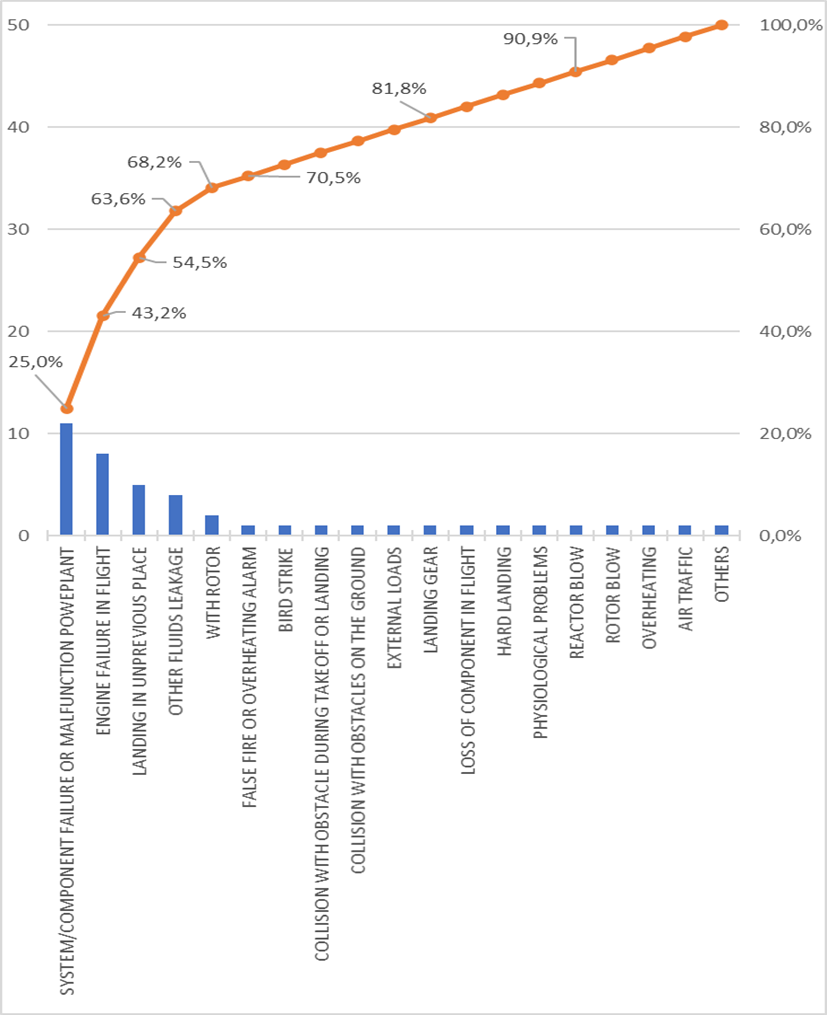
The most frequent types add up to 63.6% of the occurrences studied by this work in the last five years, as can be seen in the graph above.
[1] Manual do Comando da Aeronáutica 3-6 – Manual de Investigação do SIPAER de 2017.
3.4 MODELO DE AERONAVE
Below is the frequency of occurrences by aircraft model, represented by its International Civil Aviation Organization(ICAO) code.
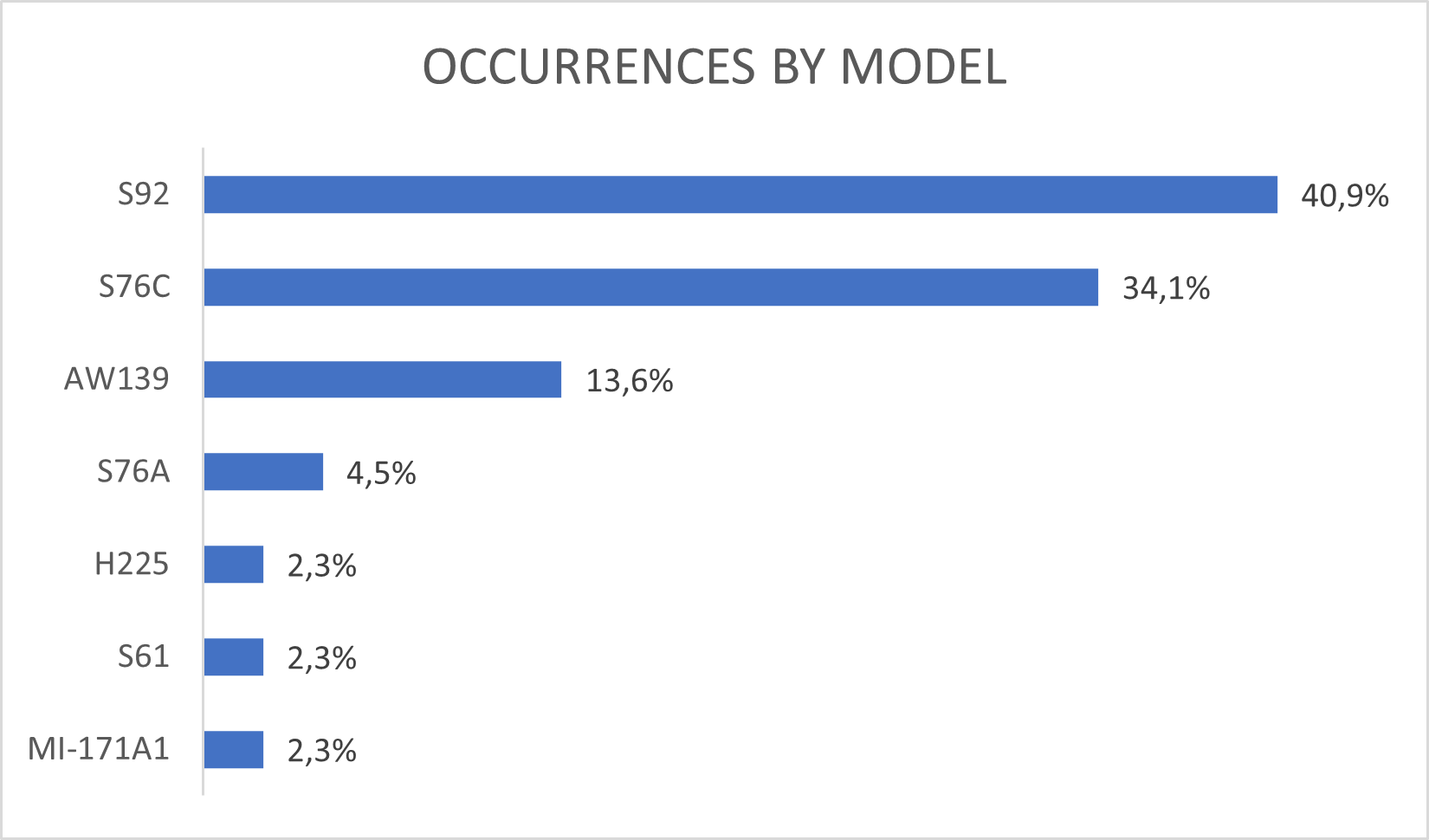
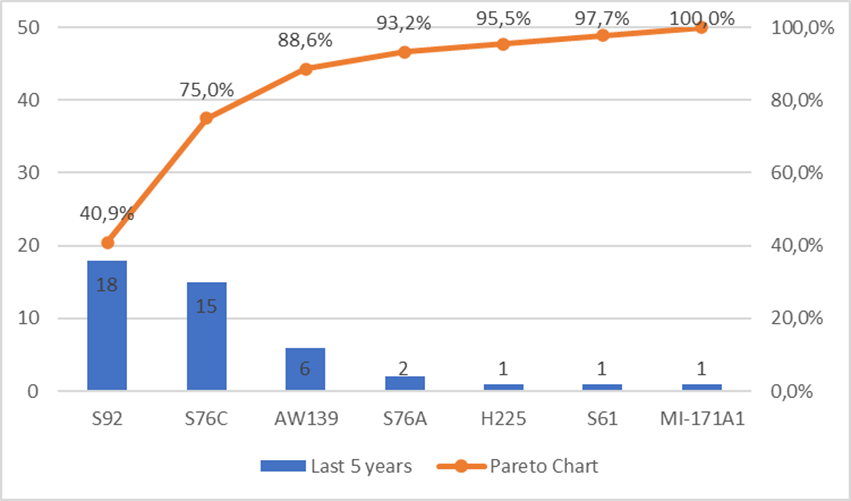
The Sikorsky S-92 (S92) model suffered almost half of the occurrences, 40%, followed by the aircraft also manufactured by Sikorsky S-76 C, 34.1%. Completing the “Top 3” there is the model Agusta-Westland AW139, 13.6%. As can be seen in the Pareto chart, the three models suffered 88.6% of the offshore helicopter operations occurrences (39).
3.5 OCCURRENCES BY LOCATION
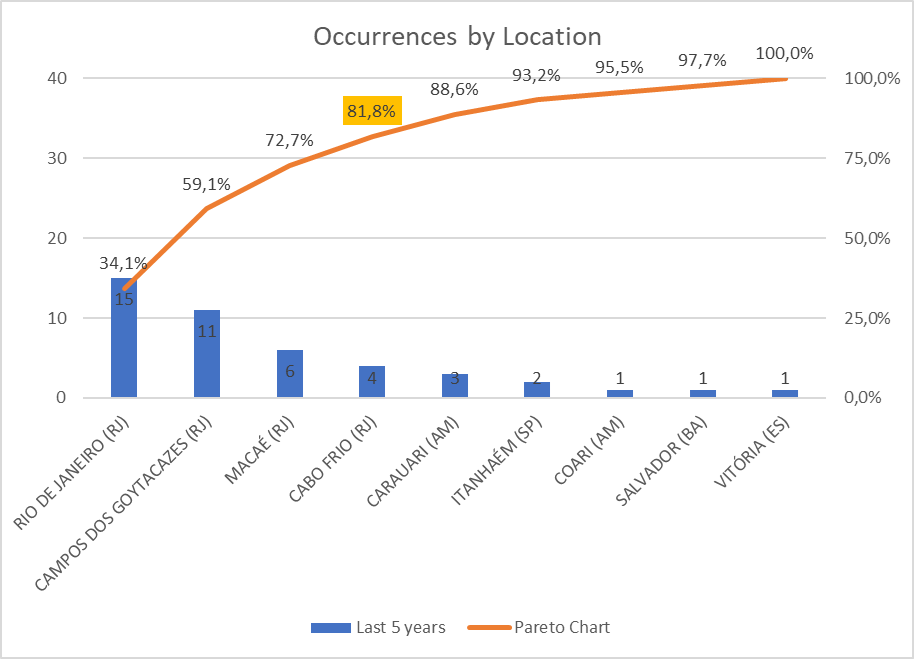
The chart below shows the distribution of occurrences by location. Occurrences that took place at sea or in maritime units are related to the airport of departure. It is observed that 81.8% occurred in the State of Rio de Janeiro, which concentrates the largest movement and largest number of offshore units in Brazil The city of Rio de Janeiro, from where flights depart from Jacarepaguá Roberto Marinho airport, hosted 34.1% and Campos dos Goytacazes, where operations originate either from the city airport or from the heliport of Farol de São Tomé, addep up to 25%.
4. RISKS ANALYSIS
Risk Management is one of the four pillars or components that support the SMS - Safety Management System, as described in ICAO DOC 9859, 4th edition. It is a proactive process that seeks to identify threats to operations and seek to create activities, actions or devices to prevent undesirable occurrences from happening. For this work, the Basic Aviation Risk Standard (BARS) - Offshore Helicopter Operations Safety Performance Requirements, produced by Flight Safety Foundation[1]which presents risk management-based requirements for ensuring operational safety in offshore aviation.
4.1. RISKS EVENTS
Risk Event or Hazardous Event , as described by safety aviation knowledge portal SKYBRARY[2], is an abnormal and uncomfortable situation in which even if there is no occurrence, the probability of an event is high. Based on the analysis of the reports, each occurrence was classified according to the risk event denoted in the BARS.
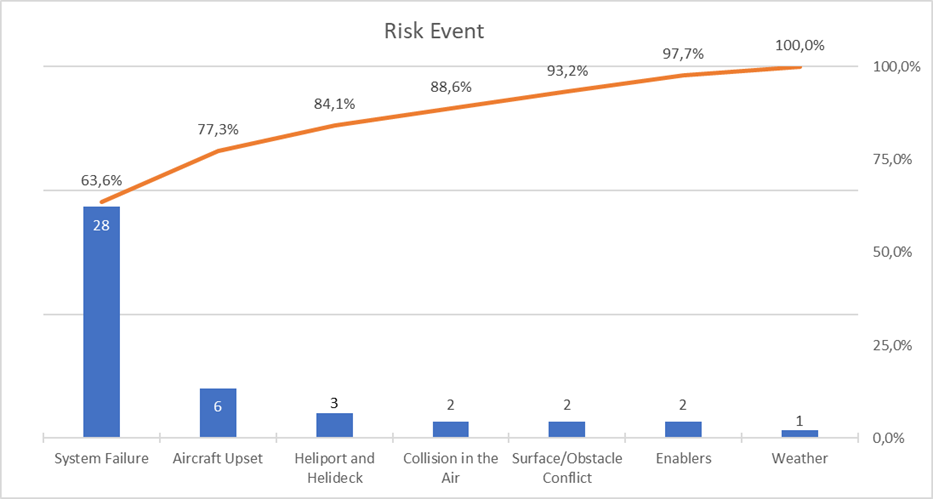
As seen in the graph above, the risk event with the highest probability of happening is System Failure. Identified in 63.6% of occurrences. Therefore, one should be more aware of the threats that can trigger this event and strengthen the defenses that will ward off the possibility of events.
As described above, the classifications were made based on an analysis of the initial reports available on CENIPA's Panel SIPAER page. An investigation of the occurrences may lead to the identification of other additional or surrogate events.
4.2. DEFENSES/CONTROLS
In order to reduce occurrences and accidents to be prevented, Controls, Barriers or Preventive Actions are implemented, as the actions, tasks, procedures or devices applied in operations that will prevent threats from triggering in risk and culminate in an event.
When an occurrence takes place, it means that one of these defense barriers was faulty or did not exist on the airline.
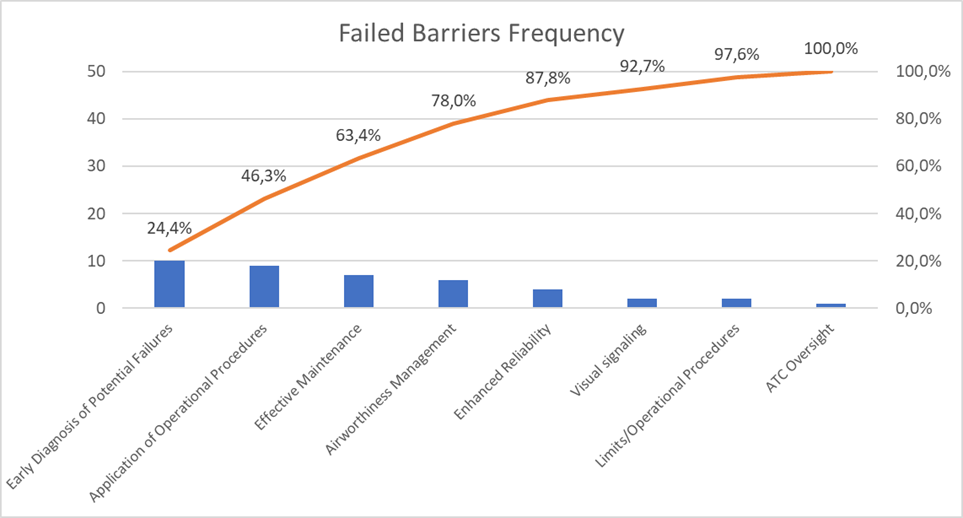
The graph above shows the frequency of fault barriers identified in the analysis of occurrences. In 24% of the failures were in the diagnosis of potential failures, another 21.9% were deficient in the application of operational procedures and another 16.9% in Effective Maintenance. Note that breaking the first five barriers on the list can result in a system failure during operation, the most frequent risk event.
[1] https://flightsafety.org/basic-aviation-risk-standard/
[2] https://skybrary.aero/articles/bow-tie-risk-management-methodology
5. CONCLUSION
One of the principles for preventing aeronautical accidents is that “every accident has a known precedent”, therefore it is necessary to study as many occurrences as possible so that preventive tools can be applied and rule out the possibility of new occurrences. As can be seen, an accident-only study would show a fall and three accident-free years. But adding incidents and serious incidents, it was seen that there is a growing trend and a consequent approach to the next accident. An accident that acctually happened in 2021[1], a year after the data of the study.
A reduction of occurrences goes through the risk management process. It is no coincidence that it is one of the pillars of the safety management system. System Failures, Aircraft Upset and Heliport and helideck are risks that are present in 84.1% of the occurrences in the last five years. A prioritization of efforts to strengthen defenses against these risks has the potential to reduce occurrences by more than 75%. In particular, barriers that have been identified as failures in events should be analyzed beforehand, and their defects corrected and performance optimized.
The Offshore aviation or offshore helicopter operations is very peculiar, with many unique features, a lot of organization and strict safety processes. This segment also shares very similar operations. Same aircraft models, same types of airfields, same environmental conditions.
The paper sought to give visibility to the gaps in terms of information related to offshore flights and, consequently, the difficulty of statistically treating data on the activities of airlines operating in the O&G segment.
It is concluded that a greater engagement of all the links involved, airlines, O&G operators, ANAC and CENIPA is extremely important sharing data. Having accurate data for more complex and dense studies that will reflect the operations, and the possibility to identify trends that are used to reinforce barriers, prevent and consequently reduce aeronautical occurrences and increase safety.
[1] Accident in 06/02/2021 at Campos dos Goytacazes, RJ. The aircraft took off from Jacarepaguá Airport (SBJR) to the SS75 helideck (9PBS) for an offshore night landing training flight. During one of the landings, the aircraft collided with the main rotor on the helideck. The aircraft suffered substantial damage along its entire length. The captain and passenger were unharmed. The Copilot had a slight injury. An Occupational Safety Technician who was under the helideck had a serious injury.
The author Tarcisio Decotelli Maia de Almeida is a Safety Management Specialist and founder of Albatroz Consulting.

